1. Outline for “Proven Steps to Land Visa Sponsorship Jobs in Europe (2026)”
-
Introduction: Why Visa Sponsorship Jobs in Europe Are a Game Changer in 2026
-
Brief overview of Europe’s labor shortages and why companies are sponsoring foreign talent.
-
Who this guide is for (Africans, Asians, non-EU citizens, etc.).
-
-
Understanding Visa Sponsorship in Europe (2026 Update)
-
What “visa sponsorship” really means.
-
Difference between sponsorship, work permits, and relocation assistance.
-
Key high-CPC concepts: “work visa Europe”, “EU Blue Card”, “skilled worker visa Europe”.
-
-
Most In-Demand Professions for Visa Sponsorship Jobs in Europe (2026)
-
Tech, healthcare, engineering, hospitality, logistics, etc.
-
How shortage occupation lists work.
-
Examples of high-demand roles that regularly get sponsored.
-
-
Top European Countries Actively Sponsoring Foreign Workers in 2026
-
Germany, Netherlands, Ireland, UK, Sweden, etc.
-
Short breakdown of each country’s sponsorship friendliness.
-
High-CPC keywords around “Germany skilled worker visa”, “Netherlands visa sponsorship jobs”.
-
-
Researching Visa Sponsorship Jobs the Smart Way (Not Just Random Applying)
-
How to identify real sponsorship offers vs vague “relocation support”.
-
Using filters on job boards (LinkedIn, Indeed, Glassdoor, EURES).
-
How to read job ads for sponsorship clues.
-
-
Step 1 – Get Clear on Your Target Country and Visa Route
-
Why you must stop “spray and pray” applications.
-
Choosing one or two priority countries.
-
Quick overview of common work visa routes (e.g., Germany Skilled Immigration Act, EU Blue Card).
-
-
Step 2 – Match Your Skills to Europe’s Shortage Occupations
-
How to check shortage lists.
-
Aligning your experience, certificates, and portfolio with in-demand roles.
-
Upskilling strategically.
-
-
Step 3 – Craft a Europe-Ready CV and Cover Letter for Visa Sponsorship
-
How a European-style CV differs from typical CVs in Africa/Asia.
-
Keywords, metrics, and structure recruiters expect.
-
Cover letter templates tailored to sponsorship.
-
-
Step 4 – Optimize Your LinkedIn Profile for Recruiters in Europe
-
Using location, headline, “open to work”, and relevant keywords.
-
Portfolio links, recommendations, and skills endorsements.
-
Networking with recruiters and hiring managers.
-
-
Step 5 – Where to Find Genuine Visa Sponsorship Job Listings in Europe
-
Best job sites and official platforms.
-
Company career pages that are known for sponsorship.
-
Remote-first European companies that sponsor relocation.
-
-
Step 6 – Apply the Right Way (Quality Over Quantity)
-
Tailoring each application.
-
Email scripts for contacting recruiters.
-
Following up professionally without sounding desperate.
-
-
Step 7 – Interview Like a Pro (And Subtly Discuss Sponsorship)
-
Common interview formats (video, technical tasks, HR rounds).
-
How and when to bring up visa sponsorship.
-
Salary, relocation packages, and contract details.
-
-
Step 8 – After the Offer: Visa Process, Documents, and Timelines (2026 Reality)
-
Typical documents needed for work visas.
-
What your employer does vs what you must do.
-
Embassy appointments, relocation timelines, and family members.
-
-
Realistic Timelines, Mistakes to Avoid, and Red Flags in 2026
-
How long it usually takes from first application to landing in Europe.
-
Common mistakes that kill your chances.
-
How to spot scams and fake sponsorship offers.
-
-
Bonus: Low-Competition Strategies to Stand Out in the 2026 Job Market
-
Building a niche portfolio.
-
Volunteering, remote freelancing, and internships leading to sponsorship.
-
Content + personal brand (YouTube, portfolio site, GitHub, Behance, etc.).
-
-
Conclusion: Your 2026 Action Plan for Visa Sponsorship Jobs in Europe
-
Short recap.
-
30-day action plan.
-
Final encouragement.
-
-
FAQs About Visa Sponsorship Jobs in Europe (2026)
-
5 common questions with concise, practical answers.
-
Proven Steps to Land Visa Sponsorship Jobs in Europe (2026)
Introduction: Why Visa Sponsorship Jobs in Europe Matter in 2026
If you are dreaming of living and working in Europe legally with a good salary, health insurance, and a clear career path, visa sponsorship jobs are one of the smartest routes to take in 2026.
European countries are facing serious labor shortages in areas like tech, healthcare, engineering, construction, caregiving, hospitality, and logistics. Many companies simply cannot find enough qualified people locally, so they are opening their doors to skilled workers from Africa, Asia, the Middle East, and other regions.
That is where you come in.
A visa sponsorship job in Europe means a company is willing to formally support your work visa application, submit required documents to immigration authorities, and sometimes even pay for your relocation. If you position yourself correctly, you can move from “just applying with no response” to actually signing an employment contract that comes with sponsorship.
In this guide, we will walk through proven, practical steps you can take to land visa sponsorship jobs in Europe in 2026 – even if you are starting from a non-EU country and feel the competition is huge.
Understanding Visa Sponsorship in Europe (2026 Update)
Before you fire off your CV to hundreds of companies, you need to fully understand what “visa sponsorship” means.
-
Visa sponsorship: A European employer agrees to hire you and supports your application for a legal work visa or residence permit. They often provide:
-
An official job offer or contract
-
Proof they tried to hire locally (in some countries)
-
Documents required by immigration authorities
-
-
Work permit / work visa: This is issued by a government (not the employer) but based on your job offer and application. Examples:
-
EU Blue Card (for highly skilled professionals)
-
Germany Skilled Worker Visa
-
Netherlands Highly Skilled Migrant Visa
-
Ireland Critical Skills Employment Permit
-
-
Relocation assistance: Some job ads say “relocation package” or “relocation support” but that does not always mean they will sponsor your visa. It could just mean they help you with flights or accommodation after you already have the right to work.
For SEO and for your own understanding, keep these key phrases in mind (you will also use them in your job search):
-
“visa sponsorship jobs in Europe”
-
“Europe work visa for non-EU citizens”
-
“EU Blue Card jobs”
-
“skilled worker visa Europe 2026”
-
“relocation jobs in Europe with visa sponsorship”
When you see these phrases in job ads, it is usually a good sign.
Most In-Demand Professions for Visa Sponsorship Jobs in Europe (2026)
Now, let us be honest: not every profession gets sponsorship easily. Some industries are flooded with local candidates, while others are desperate for talent.
Across Europe in 2026, these sectors are consistently in high demand:
-
Information Technology & Software
-
Software engineers, full-stack developers
-
Data scientists, data engineers
-
Cybersecurity specialists
-
DevOps, cloud engineers, AI / machine learning engineers
-
-
Healthcare & Caregiving
-
Nurses and healthcare assistants
-
Doctors and specialists (where foreign recognition is possible)
-
Elderly care workers and caregivers
-
-
Engineering & Technical Roles
-
Mechanical, electrical, civil engineers
-
Renewable energy technicians
-
Industrial automation specialists
-
-
Construction & Skilled Trades
-
Electricians, plumbers, welders, carpenters
-
Construction site supervisors
-
-
Logistics & Transport
-
Truck drivers (especially long-distance)
-
Warehouse and logistics coordinators
-
-
Hospitality & Tourism
-
Chefs, cooks, bakers
-
Hotel staff, restaurant managers
-
If your experience is related to any of these areas, your chances of landing a visa sponsorship job in Europe are much higher. If not, do not panic yet – you may be able to reposition your skills or retrain strategically.
Most European countries publish shortage occupation lists where they highlight professions that are hard to fill locally. These lists often feed directly into visa rules, making it easier for foreign workers in those roles to get sponsored.
Top European Countries Actively Sponsoring Foreign Workers in 2026
Some European countries are more open and structured when it comes to recruiting foreign talent. While policies can change, these countries remain strong options in 2026:
-
Germany
-
Known for its Skilled Immigration Act and EU Blue Card.
-
Strong demand in engineering, IT, manufacturing, and healthcare.
-
Explore official information on work visas here:
German Federal Government – Make it in Germany
-
-
Netherlands
-
Offers the Highly Skilled Migrant Visa.
-
Attractive for tech, finance, logistics, and startup roles.
-
Check official guidelines:
Government of the Netherlands – Immigration for Work
-
-
Ireland
-
Uses the Critical Skills Employment Permit and General Employment Permit.
-
Great for IT, pharma, finance, and healthcare.
-
More info on official site:
Department of Enterprise – Employment Permits
-
-
Sweden, Denmark, Finland
-
Strong tech, engineering, and research sectors.
-
Several have highly skilled and shortage occupation routes.
-
-
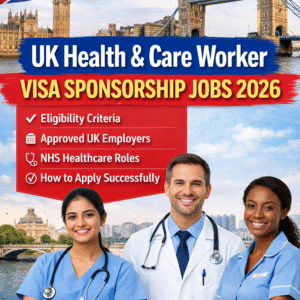
United Kingdom (post-Brexit, but still attractive)
-
The Skilled Worker Visa allows employers to sponsor foreign workers.
-
Healthcare, IT, engineering, and education roles are common.
-
-
Other emerging options
-
Poland, Czech Republic, Portugal, and Spain are increasingly open in specific sectors like IT, construction, and hospitality.
-
You do not need to target all of them. In fact, that is a mistake. You should pick one or two as your main focus.
Researching Visa Sponsorship Jobs the Smart Way (Not Just Random Applying)
Most people fail not because they are not smart enough, but because they apply blindly.
They see “Europe job” and immediately send the same CV 200 times. No targeting. No clarity. No understanding of visa rules. Then they start saying, “Europe is impossible.” It is not.
Here is how to research and filter genuine visa sponsorship opportunities:
-
Use job boards with filters
-
LinkedIn Jobs – search for “visa sponsorship” + your role (e.g., “Java developer visa sponsorship Germany”).
-
Indeed – similar search strategy.
-
Glassdoor, StepStone, and local job platforms based on your target country.
-
-
Use the official EU job mobility portal
-
The EURES portal lists job vacancies across Europe and sometimes indicates when employers are open to hiring non-EU workers:
EURES – The European Job Mobility Portal
-
-
Search with targeted keywords
Combine your profession with phrases like:-
“visa sponsorship”
-
“work permit provided”
-
“relocation and visa support”
Example: “Nurse visa sponsorship Germany”, “Cloud engineer relocation and visa Netherlands”.
-
-
Read job ads carefully
Look out for phrases like:-
“We offer relocation assistance and visa sponsorship for the right candidate.”
-
“Non-EU applicants are welcome, sponsorship available.”
-
“Eligible for EU Blue Card.”
-
If a job ad never mentions relocation or sponsorship, and the company is not known for hiring from abroad, the chances are lower – though not always zero.
Step 1 – Get Clear on Your Target Country and Visa Route
This is where your journey becomes serious.
Instead of saying, “I just want a job in Europe,” decide:
-
“I am targeting Germany and Netherlands.”
-
Or, “I am focusing on Ireland as my primary destination.”
Once you choose, study that country’s official work visa routes. For example:
-
Germany – EU Blue Card, Skilled Worker Visa
-
Netherlands – Highly Skilled Migrant Scheme
-
Ireland – Critical Skills Employment Permit
Your goal is to understand:
-
Minimum salary thresholds
-
Required qualifications
-
Language expectations (e.g., German, Dutch, etc.)
-
Whether your profession appears on their shortage list
This will help you stop wasting time on roles that cannot realistically lead to sponsorship in 2026.
Tip: Start with the official government or immigration website of that country. Avoid relying only on social media rumors and random blogs.
Step 2 – Match Your Skills to Europe’s Shortage Occupations
Now that you know which country you are targeting, match your background to what they actually need.
Ask yourself:
-
What job titles in my field align with their shortage list?
-
Do I have the required degree or experience?
-
Am I missing a key certification that could drastically boost my chances?
Examples:
-
You are a nurse in Nigeria or India: check if your profession is on Germany’s, Ireland’s, or UK’s shortage lists and what re-licensing looks like.
-
You are a software developer: target roles like “backend engineer”, “full-stack developer”, “cloud engineer” in nations with massive tech demand.
-
You are a mechanic or electrician: focus on construction or industrial roles in places like Germany, Netherlands, or the Nordics.
If you notice a gap – for example, your profile is good but not competitive – this is the time to upskill. A 3-month targeted course (in cloud computing, data analysis, or cybersecurity) might make a much bigger difference than sending 300 weak applications.
Step 3 – Craft a Europe-Ready CV and Cover Letter for Visa Sponsorship
Your CV is not a biography. It is a marketing document.
A Europe-ready CV should:
-
Be clear, concise, and structured
-
1–3 pages depending on experience.
-
Use headings like “Professional Summary”, “Skills”, “Experience”, “Education”, “Certifications”.
-
-
Include a strong professional summary
Example:
“Skilled Java developer with 5+ years’ experience building scalable fintech applications, seeking opportunities in Germany or the Netherlands with visa sponsorship. Proven track record in reducing system downtime by 30% and improving performance in high-traffic systems.” -
Use metrics and achievements
-
“Increased sales by 25%”
-
“Managed 50+ patients per day with 98% satisfaction scores”
-
“Cut server costs by 40% by optimizing cloud infrastructure.”
-
-
Highlight skills relevant to EU employers
-
Technical skills (programming languages, tools, equipment).
-
Soft skills (communication, teamwork, problem-solving).
-
Language skills (especially if you know basic German, Dutch, etc.).
-
-
Tailor your CV to each job
-
Mirror keywords from the job ad.
-
Emphasize experience that matches their requirements.
-
Your cover letter should:
-
Mention the specific position and company.
-
Briefly explain why you are a strong match.
-
Clearly state your interest in relocation and visa sponsorship.
-
Reassure them that you have researched their country and are ready to relocate.
Example sentence:
“I am currently based in [Your Country] and fully prepared to relocate to Germany. I understand the EU Blue Card requirements and would welcome the opportunity to discuss how your organization can support visa sponsorship for this role.”
Step 4 – Optimize Your LinkedIn Profile for Recruiters in Europe
In 2026, your LinkedIn profile is almost as important as your CV – sometimes even more.
Here is how to optimize it for European recruiters:
-
Professional headline
-
Instead of “Software Engineer”, try:
“Senior Java Developer | Microservices & Cloud | Open to Relocation and Visa Sponsorship in Europe (2026)”
-
-
Profile photo and banner
-
Use a clean, professional picture.
-
Add a simple banner that reflects your industry (optional but nice).
-
-
About section
-
Write a short, powerful summary showing:
-
Your skills
-
Your achievements
-
Your interest in European opportunities and visa sponsorship
-
-
-
Experience and skills
-
Mirror the structure of your CV.
-
Add key skills that recruiters search for (e.g., “Kubernetes”, “ICU care”, “React.js”, “road freight logistics”).
-
-
Location and “Open to work”
-
Set your “Open to work” preferences to cities in Europe, not only your home country.
-
This signals to recruiters that you are serious about relocating.
-
-
Engage with content
-
Comment on posts from European companies in your industry.
-
Share insights, projects, or case studies.
-
This builds visibility and trust.
-
Step 5 – Where to Find Genuine Visa Sponsorship Job Listings in Europe
To make your search efficient, focus on platforms and companies known for sponsoring foreign workers.
Some strong starting points:
-
EURES – European Job Mobility Portal
Browse cross-border vacancies and filter by country or sector:
https://eures.ec.europa.eu -
LinkedIn Jobs
Use keyword combinations like:-
“visa sponsorship Germany software engineer”
-
“relocation Netherlands nurse”
-
“EU Blue Card data scientist”
-
-
Indeed & Glassdoor
Search similar combinations, and filter by location and salary. -
Specialized tech or healthcare platforms
-
For tech roles, many European startups and scaleups list positions on their own career pages or platforms like Stack Overflow Jobs (where available) and local tech job boards.
-
For healthcare roles, some recruiting agencies focus purely on placing foreign nurses and doctors in Europe.
-
-
Direct company career pages
Once you know a company is open to international talent, regularly check their careers section and set alerts where possible.
Step 6 – Apply the Right Way (Quality Over Quantity)
Randomly sending out applications rarely works, especially when you need sponsorship.
Instead, follow this simple but powerful approach:
-
Shortlist companies and roles that clearly mention relocation or visa support.
-
For each role:
-
Tailor your CV and cover letter.
-
Mention the role title and company name.
-
Tie your experience directly to their requirements.
-
-
Whenever possible, connect with someone inside the company:
-
HR manager, recruiter, or hiring manager on LinkedIn.
-
Politely introduce yourself and mention the role you applied for.
-
A simple outreach message could look like this:
“Hi [Name], I hope you are doing well.
I recently applied for the [Job Title] position at [Company Name]. With [X years] of experience in [your field] and strong skills in [key skills], I am very interested in contributing to your team.
I am currently based in [Country] and open to relocation and visa sponsorship in Europe. If you have any advice on how I can strengthen my application or if there is someone else I should connect with, I would truly appreciate it.
Thank you for your time.”
You are not begging; you are showing seriousness and initiative.
Step 7 – Interview Like a Pro (And Subtly Discuss Sponsorship)
Once your CV and profile are strong, the next big barrier is the interview process.
Common European interview stages:
-
HR or recruiter call – basic fit, work history, salary expectations, relocation clarity.
-
Technical or role-specific interview – tests your skills.
-
Manager / team interview – checks personality, communication, and culture fit.
-
Final offer discussion – salary, benefits, visa sponsorship, relocation package.
When it comes to visa sponsorship, here is the key:
-
Do not start every conversation with “Will you sponsor me?”
-
First, prove your value.
-
Then, once they show strong interest, you can say:
“I am excited about this opportunity. I am currently based in [Country] and would require visa sponsorship to work legally in [Target Country]. I have researched your country’s work visa pathways and I am fully prepared to support the process on my side. Is your company able to sponsor work visas for international candidates in this role?”
This shows you are informed and serious, not clueless.
Step 8 – After the Offer: Visa Process, Documents, and Timelines (2026 Reality)
If a company decides to hire you, congratulations – but there is still work to do.
Typically, the process looks like this:
-
Employment contract or official job offer
-
Make sure it is written and signed.
-
It should clearly state salary, role, and location.
-
-
Employer’s part
-
They may register the job with immigration authorities or apply for a work permit approval.
-
They submit documents showing why they hired a foreign worker.
-
-
Your part
-
Gather educational certificates, professional licenses, and sometimes translations.
-
Provide police clearance from your home country.
-
Get health insurance (depending on the country and process).
-
Book a visa appointment at the embassy or consulate.
-
-
Visa interview and decision
-
Be ready to explain your job role, salary, and employer.
-
Show that you know basics about living in that country and have realistic plans.
-
-
Relocation
-
Book your flight only after receiving the visa (to avoid expensive mistakes).
-
Prepare finances for initial accommodation and living costs until your first salary.
-
Timelines can vary a lot. For some, the whole journey from job offer to arrival can take 2–6 months or longer, depending on the country and embassy workload.
Realistic Timelines, Mistakes to Avoid, and Red Flags in 2026
To keep your expectations grounded:
-
It is normal to apply for dozens of jobs before you get serious replies.
-
It is realistic to spend several months preparing your CV, LinkedIn, skills, and portfolio before landing interviews.
-
It may take a year or more from the day you decide, “I want to work in Europe,” to the day you step off the plane – but that year can completely change your life.
Common mistakes that ruin chances:
-
Using the same generic CV for every application.
-
Applying to roles you clearly do not qualify for.
-
Ignoring visa requirements and salary thresholds.
-
Not checking official government information.
-
Falling for scams that promise “guaranteed jobs” for a fee.
Red flags to watch out for:
-
A “recruiter” asks you for money to secure a job or “faster visa.”
-
You are offered a job without any real interview.
-
The contract terms are vague, and the company refuses to answer basic questions.
-
The email address is a free generic email, not a company domain.
Whenever you are unsure, cross-check information on official government sites, and talk to people already working legally in that country.
Bonus: Low-Competition Strategies to Stand Out in the 2026 Job Market
Most applicants do the bare minimum. That is your advantage.
Here are some lesser-used strategies to stand out:
-
Build a strong portfolio
-
For developers: GitHub repositories, live projects.
-
For designers: Behance, Dribbble, online portfolio.
-
For writers/marketers: personal blog, content samples.
-
-
Share your expertise online
-
Write short LinkedIn posts or articles about what you know.
-
Record simple YouTube explainer videos or tutorials in your field.
-
This shows employers you are passionate and serious.
-
-
Freelance or work remotely for European clients first
-
If you already work with European clients remotely on platforms like Upwork, you may eventually convert that relationship into a full-time sponsored role.
-
-
Volunteer or intern strategically
-
Take internships, even remote ones, with European-based startups.
-
Prove your value. Sponsorship can sometimes come later.
-
These strategies do not replace applying to jobs, but they make you more visible and more attractive to European employers who want low-risk hires.
Conclusion: Your 2026 Action Plan for Visa Sponsorship Jobs in Europe
Let us recap the proven steps:
-
Understand what visa sponsorship really is and how it connects to work permits and routes like the EU Blue Card.
-
Choose your target countries instead of trying to apply everywhere at once.
-
Match your skills to shortage occupations and, if necessary, upskill strategically.
-
Create a Europe-ready CV, cover letter, and LinkedIn profile that clearly signal your readiness for relocation and sponsorship.
-
Search smart on job platforms like LinkedIn, Indeed, and EURES using the right keywords and filters.
-
Apply with quality, not quantity – tailored applications and polite networking with recruiters.
-
Interview confidently, proving your value first before discussing sponsorship.
-
Navigate the visa and relocation process carefully once you receive an offer.
-
Avoid scams, manage expectations, and stay consistent even when it feels slow.
-
Use low-competition strategies like portfolios, content creation, and strategic internships to stand out.
If you treat this as a serious project and give yourself a realistic timeframe (6–18 months), visa sponsorship jobs in Europe in 2026 become a clear, achievable goal – not a fantasy.
Your next step? Pick one country, research its visa route today, and start aligning your profile to what they actually need. Every focused step moves you closer to that offer letter.
FAQs About Visa Sponsorship Jobs in Europe (2026)
1. Can I get a visa sponsorship job in Europe without a university degree?
Yes, it is possible in some sectors, especially in skilled trades, logistics, hospitality, and caregiving. However, higher-skilled programs like the EU Blue Card usually require a university degree and a certain salary level. If you do not have a degree, focus on roles where experience, certifications, and technical skills matter more than formal education, such as truck driving, caregiving, or certain IT support roles.
2. Do I need to speak German, Dutch, or another European language to get sponsored?
Not always, but it helps a lot. Many tech and multinational companies use English as their working language and are happy to hire English-speaking talent. However, in fields like nursing, teaching, and some customer-facing roles, knowing the local language is either a strong advantage or a formal requirement. Even basic language skills can show commitment and set you apart from other candidates.
3. How long does it usually take to move to Europe with a sponsored job?
Realistically, the process can take anywhere from a few months to over a year. You must factor in time to prepare your CV and profile, apply for roles, interview, get an offer, and then complete the visa and relocation process. Embassy processing times also vary by country and season. The key is to start early, stay consistent, and keep improving your profile while you apply.
4. Is it safe to pay an agent to find me a visa sponsorship job in Europe?
Be extremely careful. Many “agents” are scammers who promise guaranteed jobs and visas if you pay them. In most legitimate cases, employers do not ask you to pay for a job offer. It is better to apply directly via official job sites, company career pages, or reputable recruitment agencies. Always verify the company, ask for a written contract, and never send money for “job offers” or “faster visa processing” unless you are dealing with clearly official, transparent channels.
5. What is the best way to start if I feel overwhelmed?
Break the journey into small, manageable steps. This week, pick one country and read its official work visa information. Next week, update your CV and LinkedIn to align with that country’s shortage occupations. In the following weeks, start applying intentionally and connecting with recruiters. Instead of trying to do everything at once, commit to steady progress. Over time, those small, focused actions can open the door to your European visa sponsorship job in 2026.